Subscription or Custom Build? What You Really Pay For Over the Years
A custom build looks like one price. A subscription looks like forever. Here is what each one actually buys you, year after year, and how to choose.
 Imobria team · 2 min read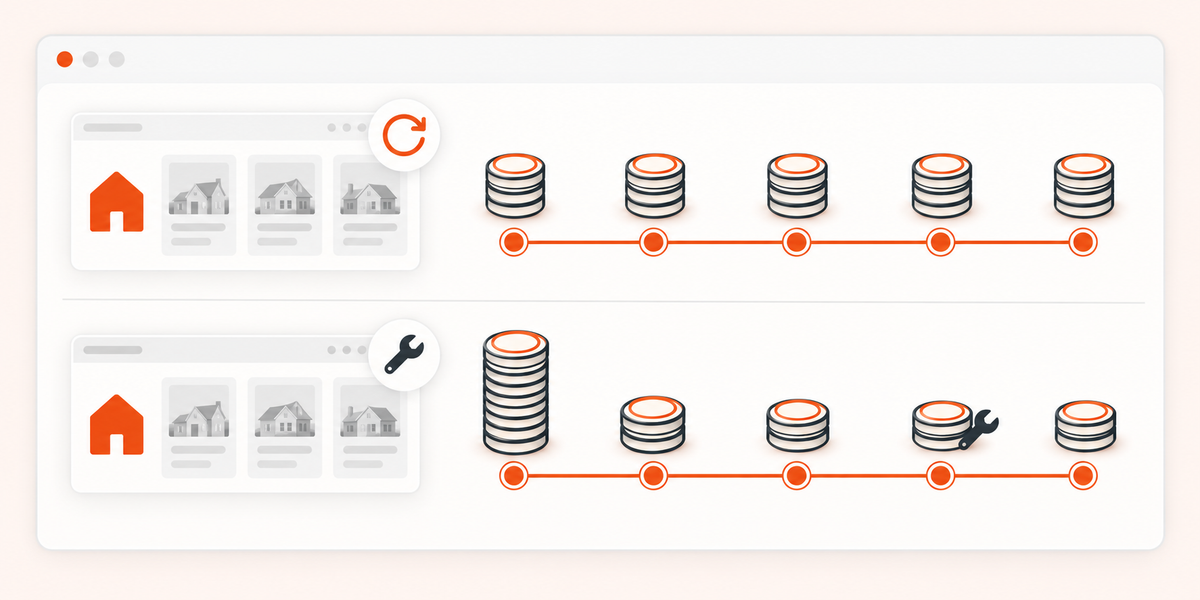
There are two ways to pay for a property platform, and both of them are slightly misleading.
A custom build arrives as one big number, which feels final. A subscription arrives as a small number every month, which feels endless. Neither feeling is quite right.
Here is what you are really paying for in each case.
The one-off build is not a one-off
Software is never finished. Browsers update, security rules move, the tools you connect to change how they work, and your team starts asking for things nobody planned.
So the build price buys you version one. Keeping version one alive is a separate bill, and it arrives every year for as long as the platform exists.
Think of it like buying a car versus leasing one. Owning feels cheaper until you remember tires, servicing and the strange noise from the engine.
What the subscription actually covers
With a managed subscription, the vendor handles hosting, security patches, backups and maintenance. Shared platform improvements can benefit customers, while custom features and larger changes require an agreed scope and quote.
With Imobria it is simple to picture:
- Your front end (the design and build of your branded screens) is a one-time purchase.
- The platform is a monthly subscription on one meter: active listings.
- Hosting, maintenance and ticket support are included, with no staff-seat charges. Included capabilities and API requirements are confirmed in your scope. New features, larger changes and third-party provider costs are separate; no fixed monthly feature-release schedule is promised.
"But I lose control"
Less than you think. The control that matters to a property business is over your brand, your data and how your team works.
You keep your logo, colors and domain on every screen and email. You choose which modules to switch on. You decide who sees what, with roles for owners, branch managers and agents. Your data is kept separate from every other client's and is access-controlled.
What you give up is the maintenance, which most teams are happy to hand over.
Where the risk sits
A custom build carries the full risk of a custom project: delays, scope creep, and a first version that needs rework once real people use it.
A shared platform spreads that risk. The core is already built and improved for everyone, so fixes and features reach you without a project plan.
When a custom build is the right call
When owning the code, or one genuinely unique capability, is central to your business. A proprietary engine. A workflow nobody supports. Deep links into internal systems.
Even then, a hybrid often works best: run on the platform for the everyday work, and commission custom development only for the part that makes you different. Cod3Labs, the studio behind Imobria, does that kind of custom work.
A simple way to decide
- Add up the cost over several years, not just the launch price.
- Write down the control you actually need, not the control that sounds nice.
- Ask whether your core requirement is truly unique.
Predictable costs and a fast start point to a subscription. A singular, strategic feature points to building, at least in part.
If you want to talk through your numbers, book a demo. For the bigger picture, read Build or Buy? next.
Find the right Imobria for your business
Compare products, setup scope and listing plans.
View pricing