One Platform, Many Business Models: Franchises, Developers and Asset Managers
A franchise, a developer and an asset manager do not run the same business. Here is how one platform bends to fit each of them, and what stays the same.
 Imobria team · 2 min read
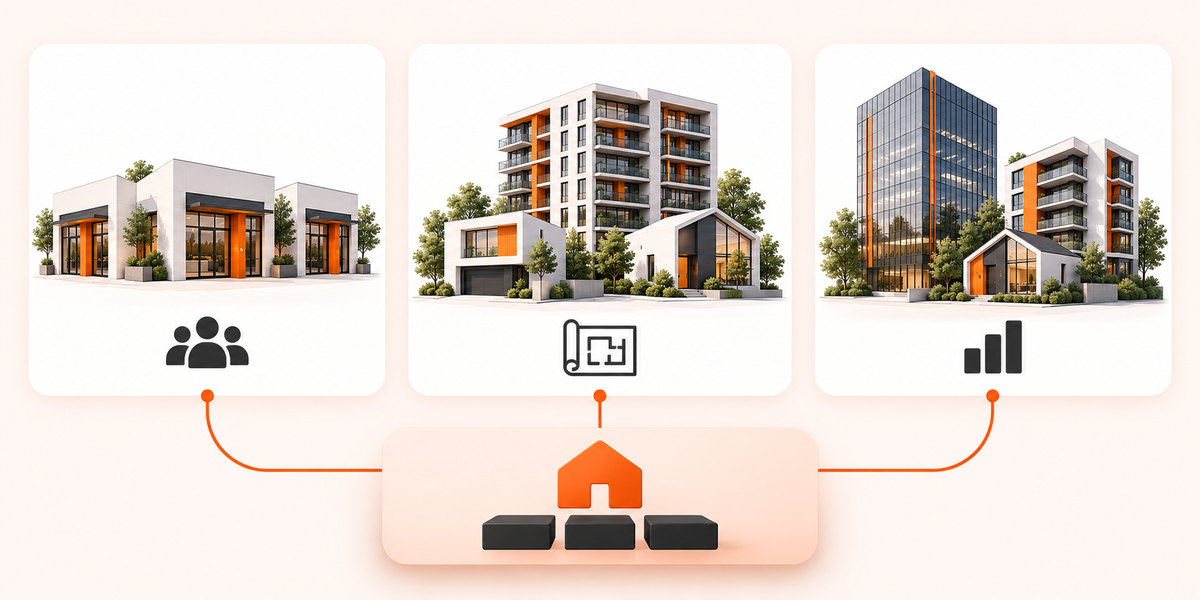
Ask a franchise owner, a property developer and an asset manager what a "good week" looks like, and you will hear three different answers.
So how can one platform serve all of them? The same way one kitchen serves a bakery, a restaurant and a catering company: the equipment is shared, the menu is not.
The shared core, and the part that bends
Every Imobria client runs on the same core. What changes is the design, the modules switched on, and the roles around them.
A shared core.
Many ways to work.
No separate copy of the platform for each client. Instead, a custom theme and a set of modules that fit each business, with security patches, bug fixes and agreed updates reaching every client through the same core.
Franchises: one brand, many owners
A franchise wants consistency and independence at the same time. Which sounds contradictory, and is a bit of a juggling act.
What they lean on:
- Roles and permissions. Head office, franchisees and sales agents see different things.
- Branded everywhere. The same look across every office's pages and emails.
- Analytics. Comparing offices without chasing each one for a spreadsheet.
Developers: one project, many buyers
A developer is selling a building that does not exist yet, to people who want answers now.
What they lean on:
- Listing management for every unit in a project
- Ticketing so every inquiry from the web, email or WhatsApp lands in one place
- Transactions and documents with e-signing, so reservations and contracts move forward without paper
- Calendar and viewings for model-apartment appointments
Asset managers: many properties, steady paperwork
For an asset manager, the thrill is not the sale. It is knowing where every document, invoice and obligation is.
What they lean on:
- Documents stored next to the property and the people involved
- Invoicing and financials kept in the same system as the deals
- Tasks and workflows that remind people before something is due
Boutique brokerages: small, quick, personal
A small brokerage does not need thirteen modules on day one. It needs a CRM that remembers people, an inbox that gathers every inquiry, and a calendar.
Start small. Switch things on when the team is ready. That is the whole point of the modular approach.
What all four share
Under the different faces, the same few needs repeat: one place for inquiries, one record per person, one set of documents, and a team that sees what its role requires.
Your data is kept separate from every other client's and is access-controlled. Your brand is on everything. And if you already have your own website or app, you can connect it to the Imobria API in an implementation we scope and quote with you.
Which one are you?
Probably a mix, honestly. Most businesses are.
Book a demo and tell us how your week actually goes. We will show you which modules match. If you want the plain-English basics first, read White-Label Platforms, Explained.
Find the right Imobria for your business
Answer four quick questions and we'll recommend Agent, Agency or Marketplace.
Find your product