Real Estate Lead Generation: Build Your Own Lead Engine Before You Pay for More
Most real estate lead generation advice stops at getting inquiries. Here is how to track every lead, set a response rule and spend where viewings come from.
 Imobria team · 5 min read
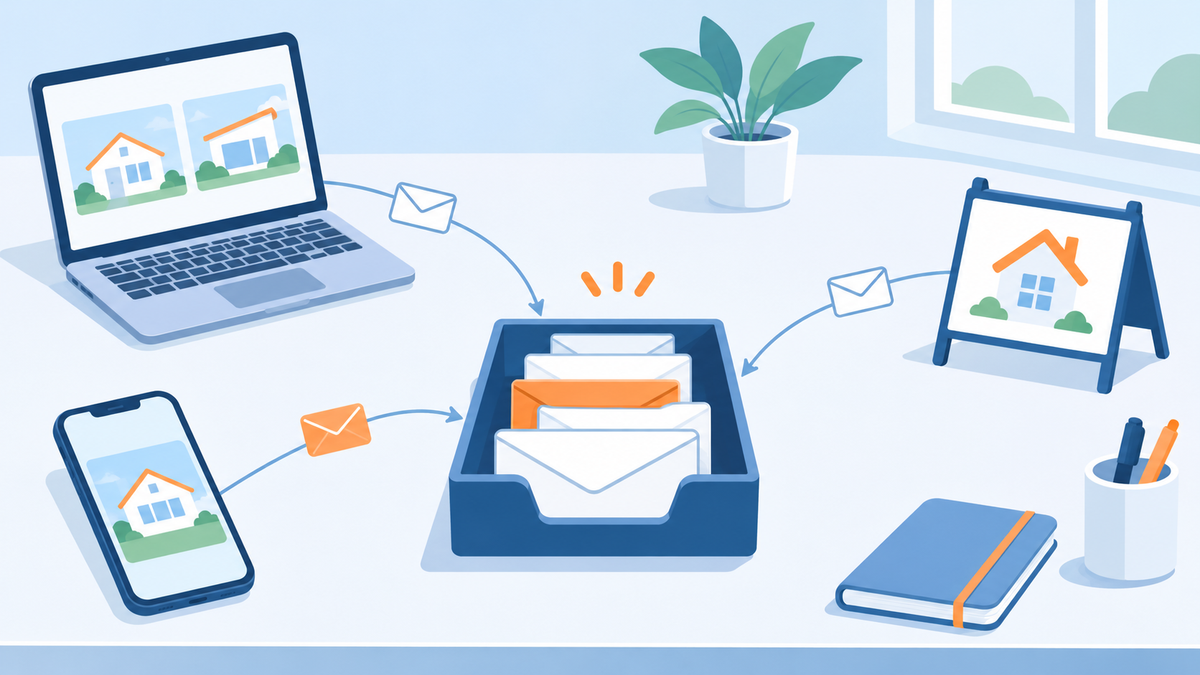
Real estate lead generation works when every inquiry is captured in one place, answered by a clear rule, and traced to the viewing or sale it produced. Buying more leads without that system just buys more leakage.
Most agencies already pay for inquiries through portals, ads and lead vendors. Then the names land in inboxes, phones and notebooks, nobody records where they came from, and follow-up depends on who happened to see them. You paid for the lead and lost it in the gap.
Where do your inquiries actually come from today?
Start by counting. Take the last month and list every way people reached you: website forms, office calls, agents' mobiles, chat messages, portal and ad inquiries, signboard calls and referrals.
For each source, note how many inquiries it sent and how many your team followed up properly. The second number is usually the uncomfortable one. Often the cheapest source turns out to be the best, and the dearest is where leads go to be forgotten.
How do you capture every source in one place?
This is the step most guides skip. Idea lists tell you where to find leads, not what happens after one arrives.
You need one record per inquiry, whatever the route. A spreadsheet can start the job. A real estate lead generation platform or CRM does it better, because it creates the record automatically. Every lead should carry:
- Source. Which channel or campaign produced it.
- Property or service. What the person asked about.
- Owner. The agent responsible, so nothing sits unclaimed.
- Status. New, contacted, viewing booked, viewed, offer, closed or lost.
- Timestamps. When it arrived and when someone first replied.
Real estate lead generation software earns its place here: it makes the source impossible to forget. If you are choosing a system, The Best Real Estate CRM for Agencies: What Actually Matters explains what to look for.
What response rule should every inquiry follow?
A lead is perishable. The first useful reply tends to win the conversation.
Write a rule your whole team can recite: every new inquiry gets a human reply within a set time in working hours. Pick a time that suits your market and staffing. Make it specific:
- Who replies, and who covers when they are away.
- What the first reply includes, such as a suggested viewing time.
- What happens if nobody responds in time.
- Why a lead is marked lost, recorded every time.
Then measure first reply time by source. If one source lands in a shared inbox and gets slow replies, you will see it.
Why track cost per viewing, not cost per lead?
A cheap lead that never views is not cheap. Cost per lead rewards volume. Cost per viewing rewards quality, and a viewing is the point where interest becomes real.
For each source, divide a month's spend by the viewings it produced. Real estate lead generation strategies look very different once ranked this way. A modest referral stream or a well-built listing page often beats a bigger paid campaign.
Beware small samples. A source that sent three inquiries tells you little, so look at a few months and allow for seasons. Our lead tracking year in review shows what to look for when you step back and read the whole year.
How do you move spend to the sources that convert?
Move in small steps, not one dramatic cut.
- Rank sources by cost per viewing, then by viewings that turn into offers.
- Reduce spend on the weakest source, and watch whether total viewings fall.
- Put the freed budget into the strongest source or into something you own, such as your own site.
- Review monthly and repeat.
Favour owned channels. Online lead generation real estate teams rely on is often rented: you pay each time and keep nothing. A branded site with search, listings and booking builds an audience you keep. For the viewing side, see Lead Generation for Estate Agents: Turn Traffic into Viewings.
The best lead generation for real estate agents is a loop: capture, reply fast, measure, move budget, repeat.
Where does Imobria fit?
Imobria includes lead management, a full CRM, analytics and a viewing scheduler, on your own branded site. Inquiries land in one place with their source attached, and bookings link back to the lead. It will not replace a paid channel you still need, but it gives you the records to judge it fairly.
On Imobria, a fully branded platform is set up within 10 business days. If you need a specific report or integration, Cod3Labs can build it as custom development.
Frequently asked questions
What is the best lead generation for real estate agents?
The best source is the one with the lowest cost per viewing in your own records, not the one with the biggest reach. Track every channel the same way and let your numbers decide.
Do I need real estate lead generation software?
You can start with a spreadsheet, but software saves time and removes gaps. It records the source automatically, assigns an owner and shows unanswered leads.
How fast should we respond to a new inquiry?
As fast as your team can reliably manage, with a written rule everyone follows. First reply speed tends to matter more than a perfect message.
Should I stop paying for leads?
Not necessarily. Keep paying for sources that produce viewings at a sensible cost, and cut the ones that do not. You can only tell the difference if you track results.
How long does Imobria take to set up?
A fully branded Imobria platform is set up within 10 business days, and goes live once you have approved it.
Want to see where your inquiries really go? Book a demo and we will walk you through tracking a lead from first message to viewing.
Find the right Imobria for your business
Answer four quick questions and we'll recommend Agent, Agency or Marketplace.
Find your product